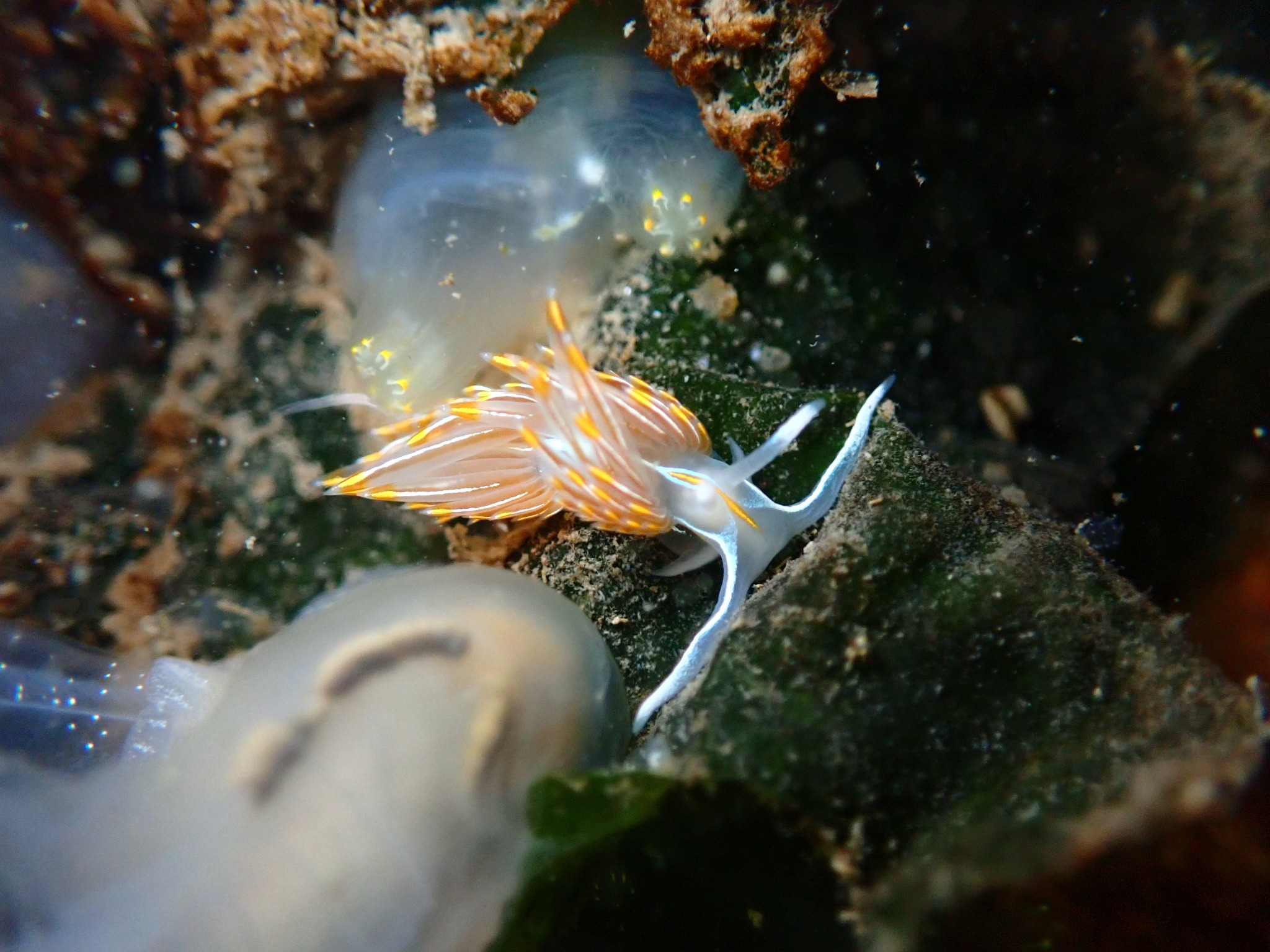
How to Handle Nudibranchs Safely
A Guide to Observing Sea Slugs Without Causing Harm
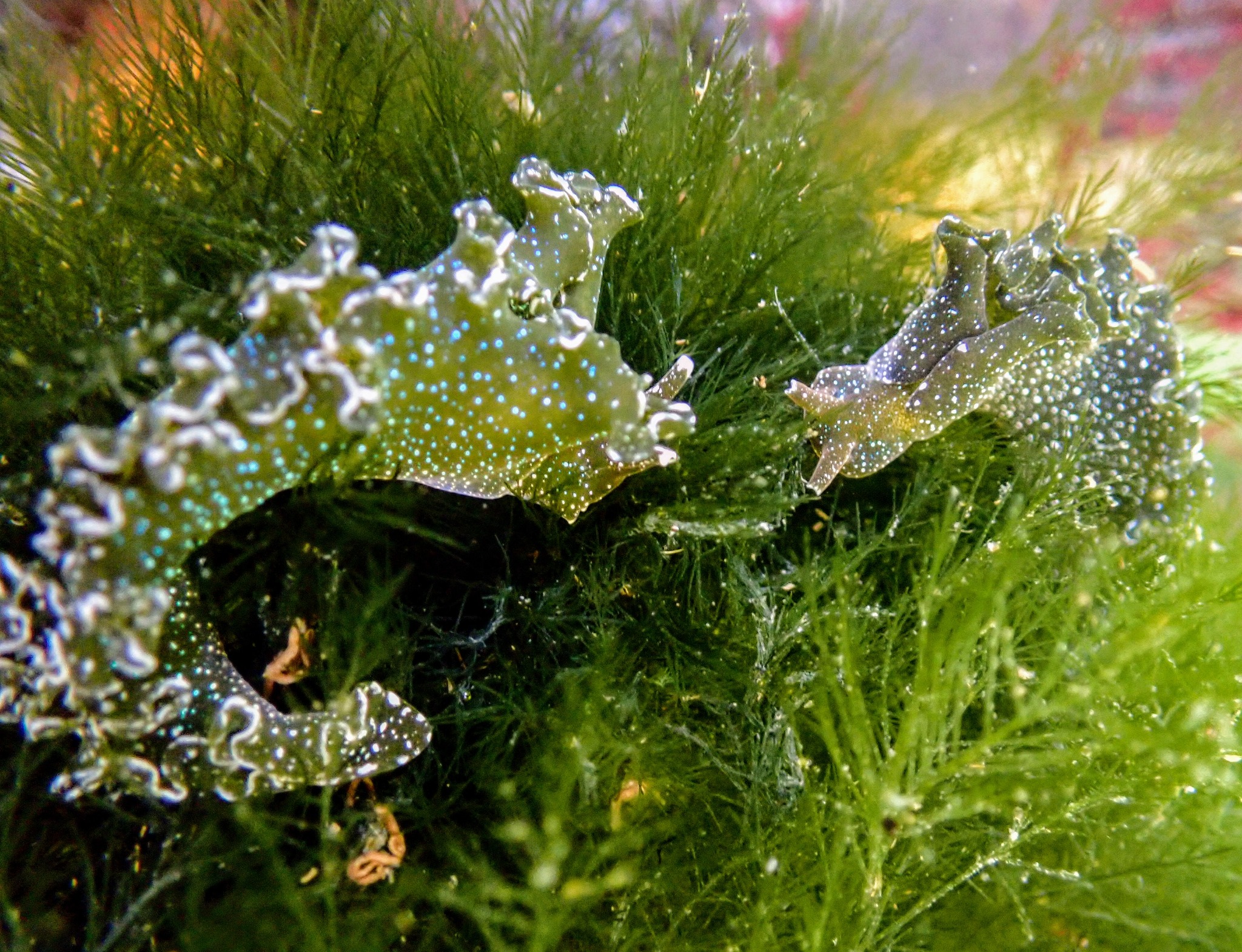
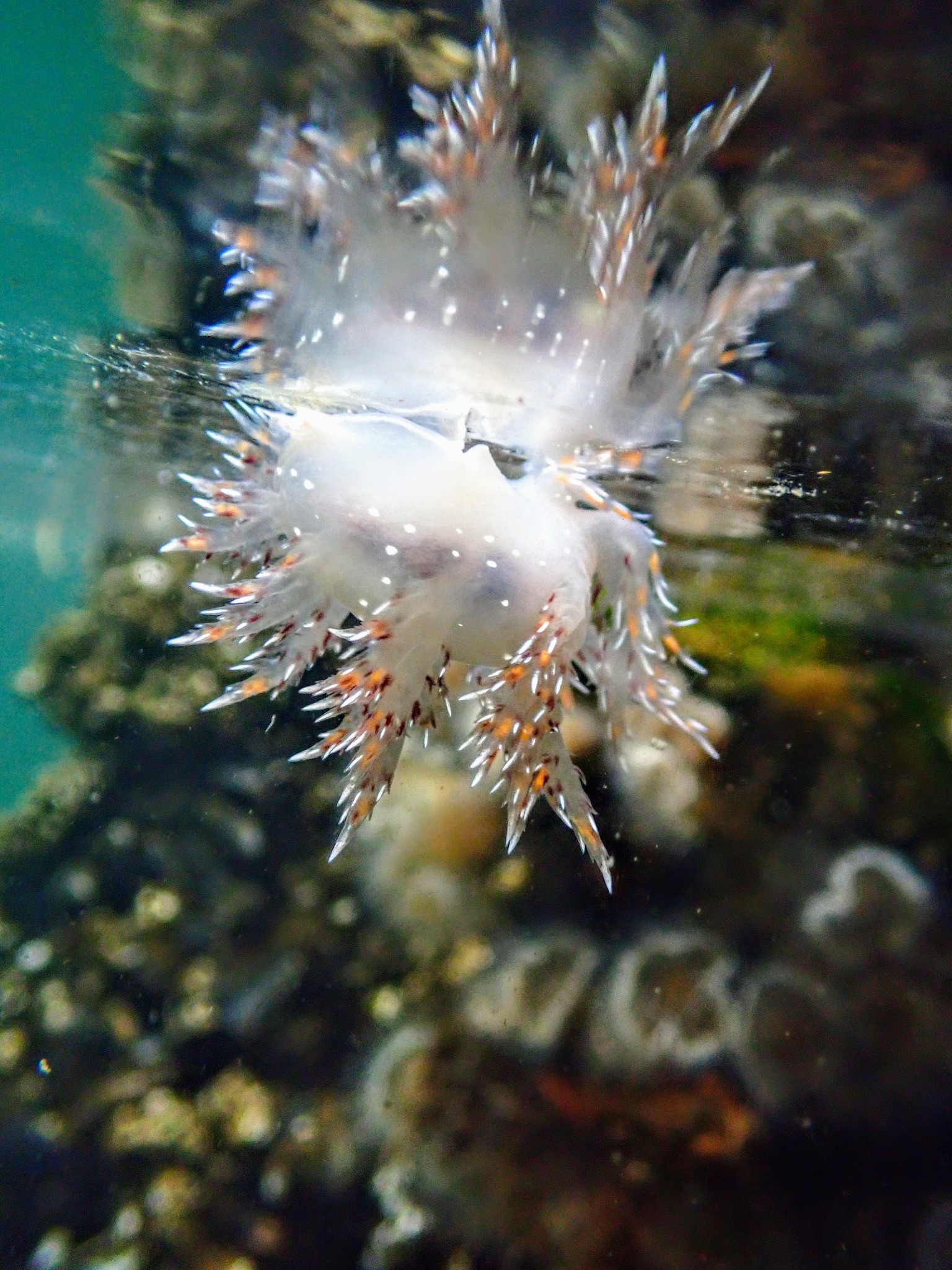
Nudibranchs (often called sea slugs) are delicate marine invertebrates commonly found in tidepools, on docks, and on other underwater structures. While they may appear sturdy or rubbery, nudibranchs are highly sensitive animals that can be easily harmed by handling, removal, or improper placement.
This guide explains when nudibranchs should not be handled, why handling can be harmful, and how to observe them responsibly.
The Short Answer
In most cases, nudibranchs should not be touched, picked up, or moved.
The safest way to interact with a nudibranch is to observe and photograph it exactly where you find it.
Why Handling Nudibranchs Can Be Harmful
Even gentle handling can cause stress or injury. Common issues include:
1. Removal From Their Food Source
Most nudibranchs feed on very specific prey such as hydroids, sponges, bryozoans, or anemones. When a nudibranch is removed from its substrate, it may be separated from the only food it can eat.
If it is returned to the wrong surface, it may slowly starve—even if it appears unharmed.
2. Improper Return to the Environment
Many nudibranchs live in highly specific orientations:
-
Some rely on water flow across their bodies
-
Others must remain in contact with their prey colony
-
Some hide in microhabitats that are not obvious to observers
If you don’t know exactly where and how a nudibranch was positioned, returning it correctly can be very difficult.
3. Stress and Physical Damage
Handling can cause:
-
Stress responses
-
Shedding or loss of cerata (the finger-like structures on many species)
-
Damage to soft tissues
-
Increased vulnerability to predators
These effects may not be immediately visible.
4. Air Exposure
Many nudibranchs tolerate brief exposure to air, but prolonged exposure—especially in warm, dry, or windy conditions—can lead to dehydration and stress.
Repeated air exposure is especially harmful.
5. Containers and “Tubs”
Placing nudibranchs into containers, buckets, or tubs is risky because:
-
Water temperature can change quickly
-
Oxygen levels may drop
-
Animals may be injured by surfaces or movement
-
The animal is removed from its food and habitat
Containers should not be used for casual observation or photography.
When Is Handling Ever Appropriate?
Handling may be appropriate only in very limited situations, such as:
-
A trained researcher following approved protocols
-
A knowledgeable observer correcting an immediate, obvious danger when they fully understand the species’ needs
If you are unsure whether handling is appropriate, the answer is no.
Best Practices for Observing Nudibranchs
To observe nudibranchs responsibly:
-
Photograph them in place, without moving them
-
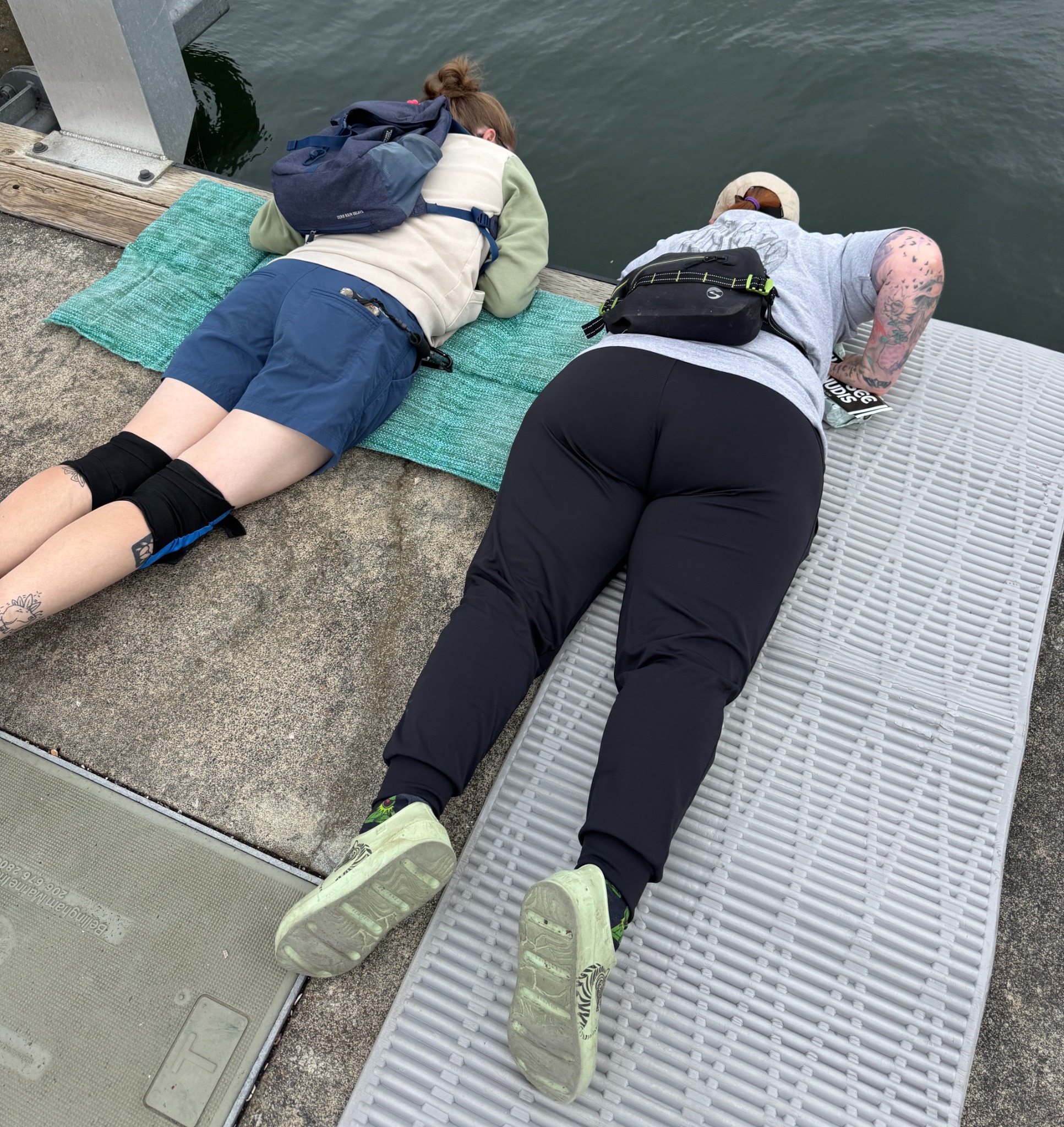
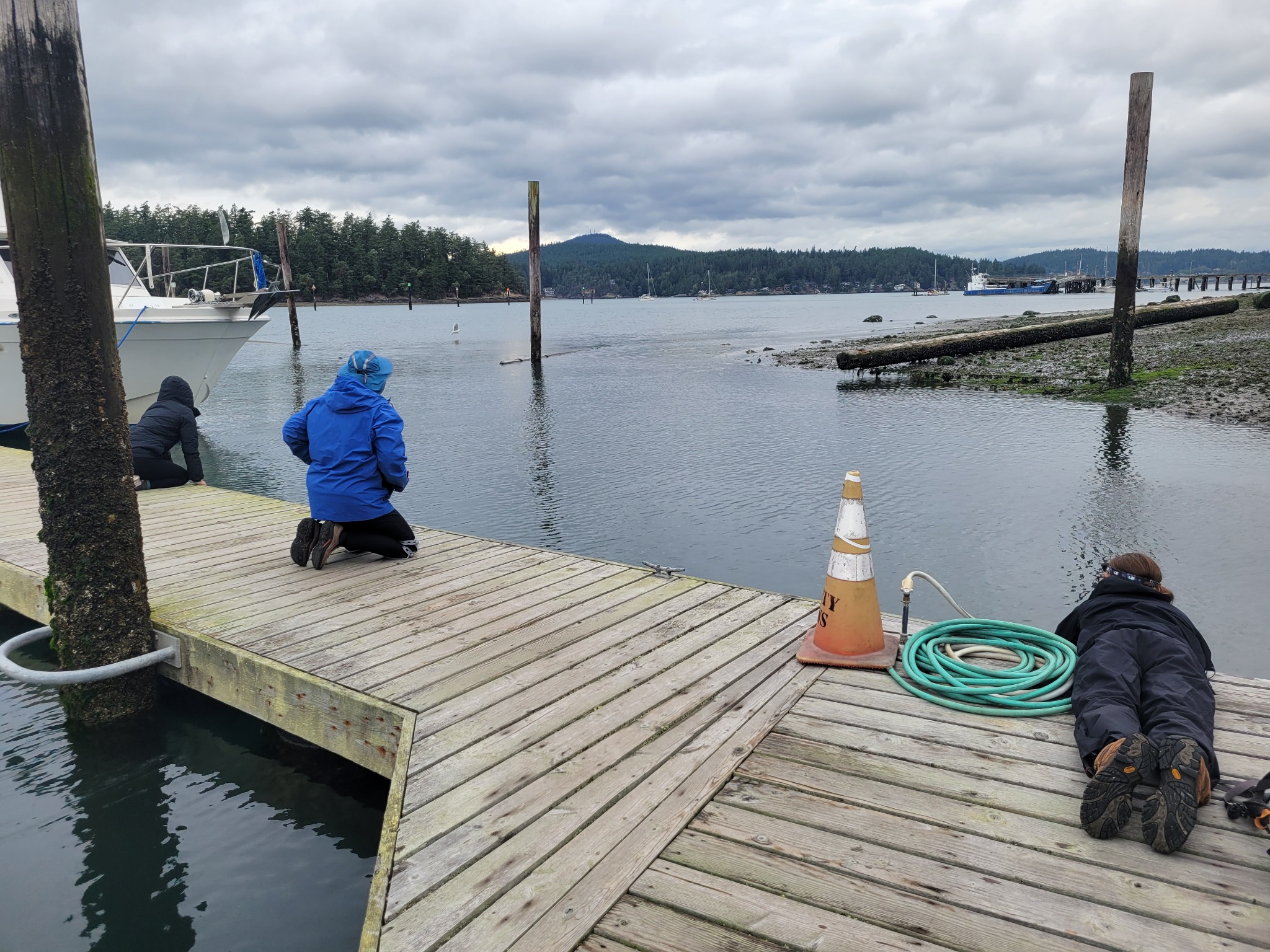
Get low and adjust your angle instead of repositioning the animal
-
Limit the amount of time spent hovering or shining bright light
-
Leave the surrounding habitat undisturbed
-
Accept that some photos are not worth the risk
Not getting a perfect image is always better than harming an animal.
Sharing Observations Online
If you share nudibranch observations online:
-
Avoid posting precise location details for sensitive sites
-
Consider obscuring coordinates on platforms like iNaturalist
-
Include notes about observing without handling
Sharing responsibly helps protect both the animals and the places they live.
A Final Note
Nudibranchs are not props, souvenirs, or toys. They are highly specialized animals living in complex, fragile environments.
Careful observation—without handling—is the best way to ensure that nudibranchs survive long after the moment you encounter them.
Nudibranch Handling FAQ
Common Questions About Sea Slugs, Handling, and Captivity
This FAQ addresses common questions about nudibranchs (sea slugs), including handling, photography, captivity, and ethical observation. These answers are based on current biological understanding and field experience.
Can nudibranchs be kept in captivity or aquariums?
In most cases, no. Nudibranchs do not survive long-term in captivity.
While a few public aquariums and research institutions have successfully kept certain species under controlled conditions, this requires:
-
Species-specific prey (often live and difficult to source)
-
Careful control of water quality, temperature, and flow
-
Extensive experience with nudibranch biology
Most nudibranchs feed on very specific organisms (often a single species of hydroid, sponge, or bryozoan). Without a constant supply of the correct prey, they will starve.
For private individuals and casual observers, attempting to keep nudibranchs in captivity almost always results in slow decline and death, even if the animal appears “fine” at first.
Is it okay to temporarily keep a nudibranch in a container for photos?
Temporary containment is still risky and often harmful.
Even short periods in containers can cause:
-
Stress responses
-
Temperature shock
-
Oxygen depletion
-
Physical injury from movement or surfaces
-
Removal from food and proper orientation
In addition, once removed, it can be difficult or impossible to return the animal to the exact location and position it needs to survive.
If the goal is photography, the safest option is always to photograph the nudibranch where it is.
What happens when multiple nudibranch species are placed together in a tub?
Putting multiple nudibranchs together—even briefly—can cause serious problems.
Potential issues include:
-
Chemical stress from defensive compounds released by different species
-
Physical damage from contact or crowding
-
Increased stress leading to cerata loss
-
Exposure to unfamiliar microbes or pathogens
Some nudibranchs produce toxic or irritating chemicals as a defense. These compounds are meant to deter predators, not to be released in confined spaces with other animals.
What looks like a harmless photo setup can be extremely stressful or lethal.
Why isn’t it okay to provoke a nudibranch to release a scent or defensive response?
Nudibranchs release defensive chemicals only when stressed or threatened.
Provoking this response:
-
Causes unnecessary stress
-
Depletes the animal’s chemical defenses
-
Increases vulnerability to predators afterward
-
Can lead to physical damage or cerata loss
Defensive displays are not performances. They are emergency responses.
Intentionally triggering them for photos, videos, or curiosity is harmful and should be avoided.
Do nudibranchs feel stress even if they don’t “look” stressed?
Yes. Stress responses in invertebrates are often subtle or delayed.
A nudibranch may:
-
Appear normal immediately after handling
-
Lose cerata hours or days later
-
Stop feeding
-
Become more vulnerable to predation
The absence of an obvious reaction does not mean the animal was unharmed.
Is it okay to rescue a nudibranch that looks stranded or dying?
In most cases, no.
Nudibranchs may appear stranded or unhealthy when they are:
-
Exposed during low tide
-
Resting between feeding bouts
-
Near the end of their natural lifespan
Without knowing the species, its prey, and its normal behavior, intervention often causes more harm than good.
Rescue may be appropriate only in rare situations, such as:
-
An animal clearly displaced by human activity
-
Immediate, obvious danger caused by artificial structures
Even then, intervention should be minimal and informed. If you are unsure, leaving the animal alone is usually the safest choice.
Can touching a nudibranch harm humans?
Yes, in some cases.
Some nudibranchs:
-
Store toxins from their prey
-
Incorporate stinging cells (nematocysts) into their cerata
-
Produce irritating or allergenic compounds
While serious injury is rare, touching nudibranchs can result in:
-
Skin irritation
-
Stinging sensations
-
Allergic reactions
Avoiding handling protects both the animal and the observer.